
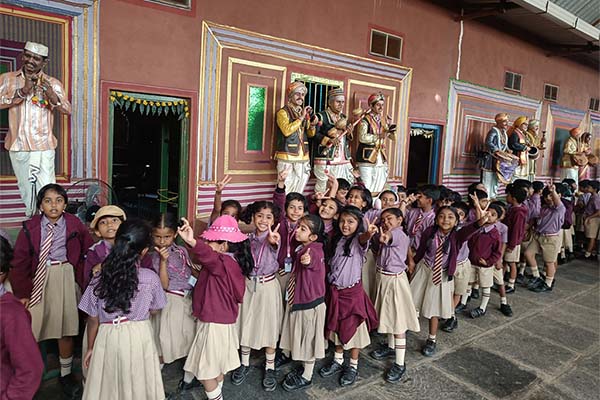
Field trips are educational outings organised by our school to places outside the usual classroom environment—such as museums, botanical gardens, historical sites, science centres, farms, zoos, industry/factory visits, cultural landmarks, or ecological parks. The idea is to give students real‑world experiences to supplement classroom learning.
What Happens on a Typical Field Trip:
- Preparation beforehand: choosing destination, aligning it with topics being studied, ensuring necessary permissions, arranging transport.
- Activities during the trip: guided tours, observing exhibits, interactive sessions, hands‑on experiments, taking notes or photos, group discussions.
- Follow‑up: students discussing what they saw, writing reports, sharing observations, bringing back ideas to class to connect with curriculum.
Benefits of Field Trips:
- Promotes hands‑on learning—students learn by seeing, touching, and experiencing things directly that might otherwise remain abstract.
- Stronger connection between theory and real life—helps concepts stick better.
- Boosts curiosity and motivation—new environments spark interest and often lead students to ask more questions.
- Develops social skills and teamwork—students work together outside the normal class structure; they learn to follow rules, cooperate, communicate.
- Encourages emotional growth and independence—dealing with new places or situations helps build confidence and adaptability.
- Cultural exposure—visits to heritage sites or diverse environments develop awareness and appreciation for different histories, traditions, and ways of life
